Spades Helped Raise This Caribbean American Girl
Here's Why a Brooklyn Tournament Brought It All Back
SHARING WITH MEL
Melissa Rose Cooper
4/15/20263 min read
I didn't learn to play Spades at home.
Growing up in a Trinidadian household, the card game of choice was All Fours — a staple at every family gathering, every cookout, every "lime" where the adults pulled out a deck and got serious. I never learned to play it. But when you grow up in Roxbury and spend your afternoons at the local Boys Club in the South End, where most of us were Black and American, spades was the thing. And because I've always had a hard time making friends my own age, I did what I always did — I gravitated toward the adults.
That's where I met Rhonda.
My mother had one rule about the Boys Club: stay near Rhonda. She was the only person my mother fully trusted in that space. And Rhonda was not the one. Jheri curl, gold teeth, zero tolerance for nonsense — she was the kind of woman who didn't have to raise her voice to command a room. She sat me down one day, put a hand of cards in front of me, and taught me how to play Spades. Not just the basics — she taught me how to read a table, how to count cards, how to bid smart. And pretty soon, I was beating the adults. Gambling for chips and soda like I had something to prove.
I hadn't thought about those afternoons in years. Until I walked into The Lunch Room.
BTW, here is some of the gear I am currently using to capture my content.
DJI Osmo Action 5 Pro for smooth, dynamic shots
DJI Osmo 360 for immersive perspectives
DJI Mic 2 for crisp, clear audio
iPhone 17 Pro Max for quick, handheld shots
DJI Osmo Mobile 6 Smartphone Gimbal for stable walking sequences
And for deets on my outfits and other faves, you can check always check out my LTK and Amazon stores.
***Some of the links in this post are affiliate links, which means I may earn a small commission if you make a purchase through them. This comes at no extra cost to you.***
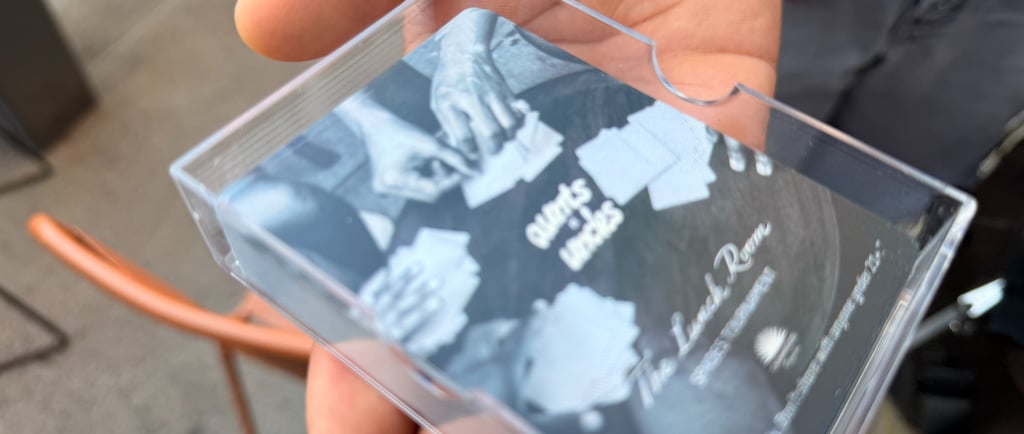
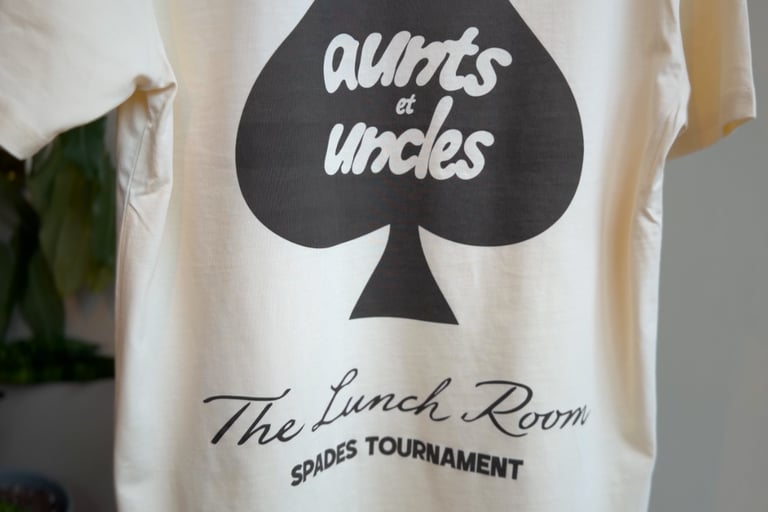
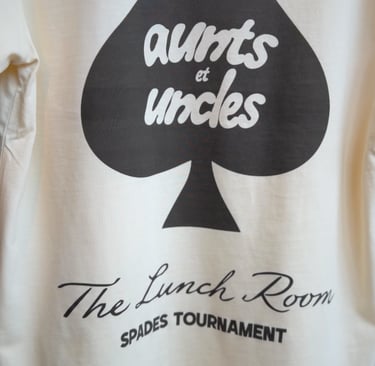
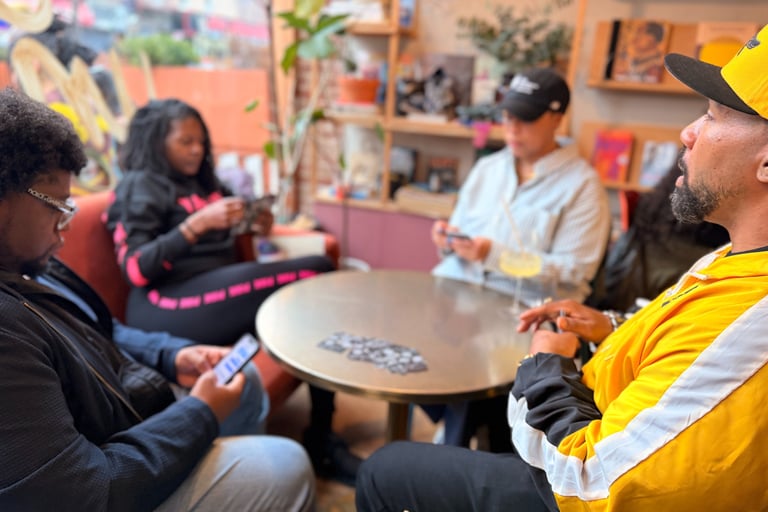
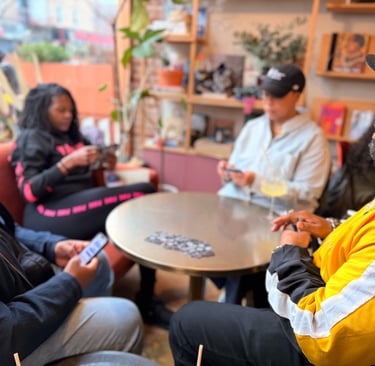
The Lunch Room was a Spades tournament held at Aunts et Uncles, a Black-owned vegan restaurant in Brooklyn, where players competed through a digital qualifier on the Trickster Cards app before advancing to a live championship night filled with music, good food, and the kind of energy you can't manufacture. I went as a journalist. I stayed as someone who needed to be in that room.
What struck me wasn't the competition — it was the people. I talked to players who hadn't touched a deck in years. They didn't show up because they had something to prove. They showed up because something that shaped them was being honored out loud, in public, in their community. One person described it as feeling like coming home. I understood exactly what they meant.
Spades has never needed a platform. It has lived in barbershops and dorm rooms, on folding tables at family reunions, in rec centers like the one where Rhonda first dealt me in. It gets passed down not through instruction manuals but through presence — someone pulling up a chair and saying, sit down, I'll show you. That's how culture actually moves. Not through institutions. Through people.
And that's what made The Lunch Room feel significant beyond the fun of it. At a moment when Black history is being stripped from school curricula, DEI programs are being dismantled, and the informal spaces where Black community has always thrived keep shrinking — somebody said, let's gather around this. Let's take something that has always belonged to us and give it a stage.
I haven't played a serious hand of Spades since those Boys Club afternoons. But I still remember every rule Rhonda taught me. That's the thing about the traditions that raise us — they stay, even when we haven't touched them in years. All it takes is the right room to bring them back.
Aunts et Uncles gave people that room. And if you ever get the chance to sit across a table from someone who learned the game the same way I did — find a partner, set your bid, and don't renege.
Rhonda would not forgive you.